
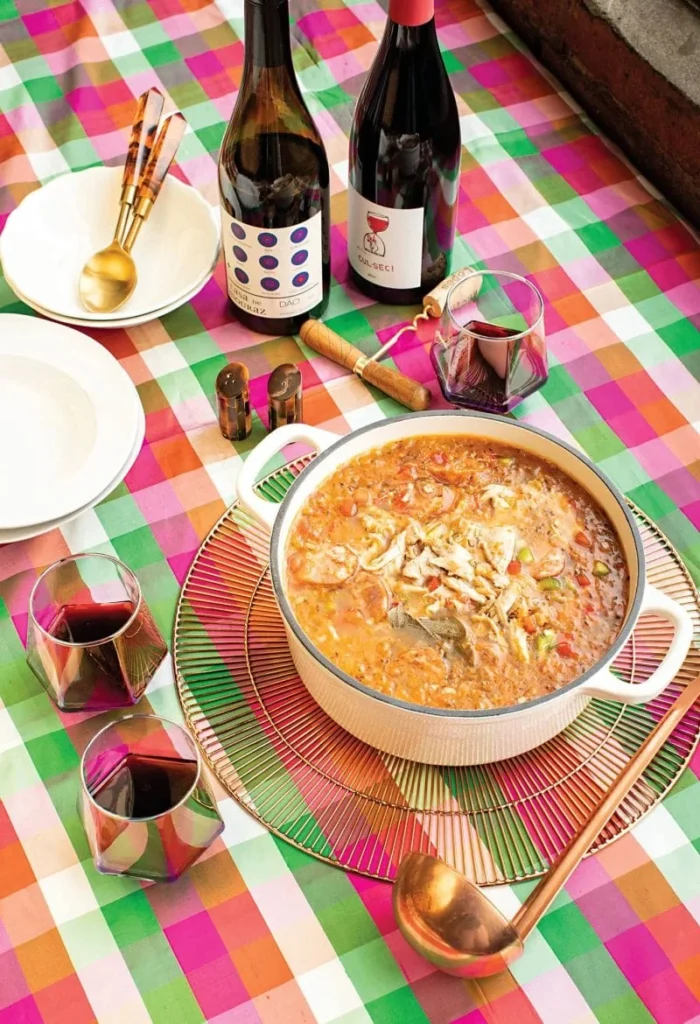
Pairing wine with spicy food doesn’t have to feel intimidating. In fact, when it’s done right, it can be one of the most exciting ways to experience both wine and cuisine. If you’ve never sat down with a fiery, fermented dish—say, kimchi jjigae, and a bright, skin-contact white wine, you’re missing a pairing that proves spice and wine can absolutely coexist.
This idea challenges the long-standing belief that wine pairing should be rigid, Eurocentric, or overly cautious. Boldly seasoned, deeply spiced foods from outside the traditional European canon deserve wine pairings that are just as expressive, vibrant, and culturally relevant as the dishes themselves.
The key is balance. The wrong wine can overpower a meal, or disappear entirely once the heat, funk, or acidity hits. After digging into expert perspectives and real-world pairings, a few principles consistently stand out.
Start With Your Own Heat Tolerance
Spice is subjective. What feels mildly warm to one person might be overwhelming to another, and that difference should guide how you pair wine.
Traditional wine advice often defaults to off-dry whites like Riesling or Chenin Blanc when spice is involved, on the assumption that a touch of residual sugar will tame the heat. And while that approach works for some, it’s not universal.
For people who genuinely enjoy spicy food, muting the heat may not be the goal at all. McCoy herself prefers wines that let the spice shine rather than smoothing it over. The takeaway is simple: decide whether you want your wine to soften, mirror, or even heighten the heat on your plate—and choose accordingly.
Lean Toward Unoaked Whites and Rosés
When it comes to spicy or fermented dishes, unoaked white and rosé wines are often the safest—and most rewarding—place to start. Wines with lower alcohol and higher acidity tend to perform better, especially with foods that are rich, tangy, or funk-forward.
High acidity can intensify spice, but it also cuts through oil, balances fermentation, and refreshes the palate. That makes it a strong match for dishes with pickled elements, chili oils, vinegars, or fermented bases.
Wine professionals often recommend crisp styles like Sauvignon Blanc, dry or lightly off-dry Riesling, and Chenin Blanc for these scenarios. On the flip side, whites with lower acidity and heavier textures—such as Viognier or Marsanne—can feel flat or heavy next to highly acidic or spicy foods.
For richer dishes, especially those built on butter, cream, or nuts, wines that combine bright acidity with ripe fruit can hold their own. A well-structured Chenin Blanc, for example, can slice through a dense, spice-laden sauce without clashing.
Choose Red Wines Carefully
Red wine and spice can work together—but not all reds are created equal. High alcohol and aggressive tannins tend to exaggerate heat and bitterness, which is why big, bold styles are usually a poor match for spicy food.
Instead, look for lighter-bodied, fruit-forward reds with moderate alcohol and softer tannins—especially ones you wouldn’t mind serving slightly chilled. These wines retain freshness and won’t fight with the dish.
Grapes like Pinot Noir, Grenache, Cabernet Franc, and some expressions of Syrah often fit the bill. Heavily tannic varieties such as Cabernet Sauvignon or Nebbiolo, however, can dull both the wine and the food when paired with intense spice or funk.
Don’t Be Afraid to Experiment
At its best, pairing wine with spicy food isn’t about strict rules—it’s about curiosity. Both great wine and great cuisine offer layers of flavor, texture, and complexity, and sometimes the most memorable pairings come from experimentation rather than convention.
If there’s one guiding principle worth keeping, it’s this: trust your palate. Let your preferences shape the pairing, and treat each glass as part of the experience—not an afterthought.
That’s where the real adventure begins.